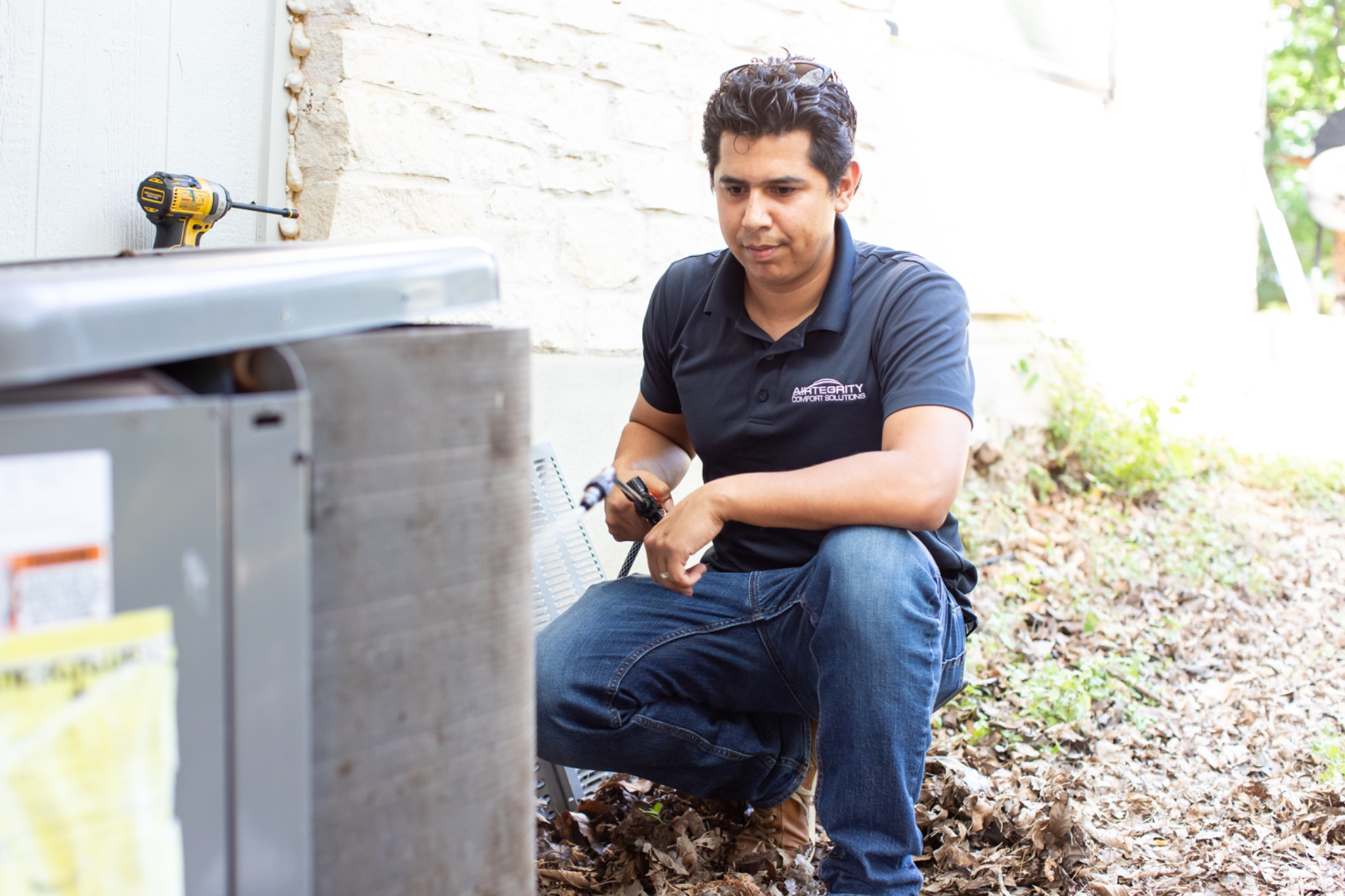
Skipping HVAC maintenance can cost thousands in repairs. Learn the real consequences from a San Antonio technician and how to protect your system year-round.
Skipping HVAC maintenance doesn't just risk a breakdown — it guarantees one, eventually. One call sticks with me more than most.
It was the middle of a San Antonio summer, heat index past 105°F before noon. I pulled up to a home where the AC had given out overnight. The homeowner was sitting in 88°F by the time I arrived. After a full diagnostic, the verdict was brutal: the compressor had seized. Replacement cost? $3,500 — part and labor alone, not counting the emergency fee.
Here's what made it worse. This family had ignored two years of warning signs — rising utility bills, worsening allergies, a system struggling to hold 76°F on moderate days. One annual tune-up at $160 could have caught a low refrigerant charge and a weak capacitor before they combined to destroy the compressor.
Below, I'll walk you through exactly what happens when HVAC maintenance gets skipped — from the first warning signs you're probably overlooking right now, to the point where damage becomes irreversible, with real cost numbers at every stage.
Neglect doesn't happen all at once. It compounds.
When a system runs low on refrigerant, the compressor works significantly harder to move heat out of the home. That extra workload generates excess heat inside the compressor. Layer in a capacitor running low on charge — which I see constantly in San Antonio — and you've got a compressor that's both overworked and undersupported. It overheats repeatedly until something fails permanently.
That's exactly what happened to that family. Two fixable problems — low refrigerant and a weak capacitor — combined into a $3,500 repair because no one caught them in time.
I use this analogy with every homeowner I meet: you wouldn't drive from San Antonio to Los Angeles without checking your oil and tires. Your HVAC system deserves the same logic. The consequences of ignoring it are just slower — and ultimately more expensive.
One of the fastest financial consequences of skipped maintenance shows up on your utility bill, not in a repair invoice.
A system running low on refrigerant — or one with a dirty condenser or evaporator coil — uses 20–30% more electricity just to reach the same temperature setpoint. On a $200 summer electricity bill in San Antonio, that's an extra $40–$60 every month, quietly draining your wallet.
What most people never consider is their ductwork. During a maintenance visit, I check for leaks — and what I find sometimes shocks homeowners. Ducts chewed through by rodents are more common than you'd expect, especially in older homes with attic ductwork. A compromised duct system bleeds conditioned air directly into unconditioned spaces, costing hundreds of dollars extra in utility bills every year. Most homeowners never connect it back to their HVAC system.
If your bill has crept up over the last two summers without any change in how you use your home, that's your system telling you it's working harder than it should.
Most homeowners assume that if the AC is running, it's fine. That assumption is where the real damage starts.
The three warning signs I see dismissed most often:
None of these symptoms feel urgent — that's the problem. But the three together almost always mean your system is past due for service and the window to fix things affordably is closing.
There's a clear tipping point, and it arrives faster than most homeowners expect.
Once a motor overheats repeatedly, the internal windings burn out. That's a replacement, not a repair. Once a compressor seizes from sustained overwork, no amount of refrigerant or electrical work brings it back. Here's what those replacements actually cost:
ProblemRepair CostSystem running 20–30% less efficientlyHundreds in extra utility bills per seasonOverheated motor$750–$2,500Failed compressor~$3,500Full system replacement$5,000–$10,000
What surprises people most is the timeline. I've seen systems reach irreversible failure after just one or two seasons of running under stress. A weak capacitor, low refrigerant, and a San Antonio summer is enough. The system doesn't need years to fail — it just needs to be ignored at the wrong moment.
If you're already seeing signs your system may be heading toward the end of its life, our post on 10 signs it's time to replace your HVAC system walks through exactly what to look for.
Mistake 1: Completely forgetting the system exists. People treat their HVAC system like a utility rather than a mechanical system that needs regular attention. It runs thousands of hours a year under significant strain. Treating seasonal maintenance as optional is how you end up with a $3,500 repair call.
Mistake 2: Thinking vinegar down the drain line is enough. Vinegar helps, but in homes older than five years, drain lines need to be fully flushed. Corrosion, dirt, and compacted debris build up in ways vinegar can't clear. When those drains clog, the backup causes water damage inside your air handler and saturates surrounding insulation — a repair bill that almost always dwarfs the cost of a proper flush.
Mistake 3: Thinking a filter swap and a rinse of the outdoor unit covers it. These are good habits, but they're not a tune-up. A proper inspection checks electrical components, refrigerant levels, capacitor charge, drain line integrity, and ductwork condition. Without that full assessment, you're blind to the components most likely to fail.
A maintenance visit isn't just about keeping the system running — it's also about protecting what you're breathing.
When I find ductwork that rodents have chewed through, homeowners are often stunned. Conditioned air mixed with insulation particles from the attic cycles through the home every time the system runs. That's a health hazard, not just an efficiency problem. The warning signs your air ducts need repair or replacement are worth knowing before a problem like this gets out of hand.
Mold is the other major air quality risk tied directly to deferred maintenance. If I spot early mold growth near the air handler or duct connections during a tune-up, I can remove it on the spot before it spreads. Missing it means it continues expanding through the duct network — and remediation at that scale is a completely different financial conversation.
Clogged condensate drain lines are the third threat. When they back up and overflow, moisture builds inside the air handler. That warm, wet environment accelerates mold and bacterial growth in exactly the place that conditions every cubic foot of air in your home.
The math here is straightforward.
A professional maintenance visit with us costs $160 — and for first-time customers, we often run a special that brings it to $120. Here's what that visit includes:
Two visits per year — one in spring before cooling season, one in fall before heating season — runs $320 annually. Compare that to a single emergency compressor replacement and the return on investment isn't close.
Our Comfort Protection Plans are worth a look if you want to lock in that twice-yearly schedule without thinking about it.
The skepticism I encounter from homeowners is valid. A lot of people have been burned.
They booked an appointment and the technician never showed. Or a tech showed up and spent the visit pushing a new system they didn't need. Or they got a repair quote that seemed wildly inflated and didn't know who to trust. These experiences are real, and they've made homeowners reluctant to call anyone until something breaks.
Honest maintenance looks different. My job during a tune-up is to inspect the system thoroughly, report exactly what I find, and recommend only what's genuinely necessary. If everything looks good, I say so. If a capacitor is getting weak, I show it to the homeowner, explain what happens if it fails, and let them decide.
We love doing maintenance calls — not because they're a sales opportunity, but because they're a relationship opportunity. When a homeowner trusts that we gave them an accurate picture and fair pricing, they call us first when something goes wrong. That's the foundation everything else is built on.
What happens if you skip HVAC maintenance? The cost doesn't disappear — it compounds. Whether you're heading into a San Antonio summer or a cooler season, the best time to schedule a tune-up is before you need one urgently.
If you want a straight answer and fair pricing, visit Airtegrity online to schedule your maintenance visit — and stop waiting for a breakdown that was always preventable.